

“That men do not learn very much from the lessons of history is the most important of all the lessons history has to teach.”
(-) Aldous Huxley
—
When learning about history, we tend to detach ourselves. After all, how can one be expected to truly integrate themself into the past while physically living in the present? Who even has time for things that happened centuries ago when we’re making new textbook entries every day?
Though, thinking about it more deeply… was it really centuries ago?
“History” implies a great length of time from “then” and “now”—some of the first things students learn about are the sieges of the Middle Ages, or the conquests of a great Khan, which truly are separated from us by a significant gap—but, contextually, that association is a bit misleading. A year ago is history; last week is history; what you ate for lunch yesterday is history… and just as a previous day’s meal provides sustenance to your body, recent history fuels the evolution of the modern day. Paying attention to how close we are to certain events on the timeline gives us insight into where things can go wrong, which provides invaluable preparation for the betterment of the world as a whole—and allows us to confront where we messed up previously.
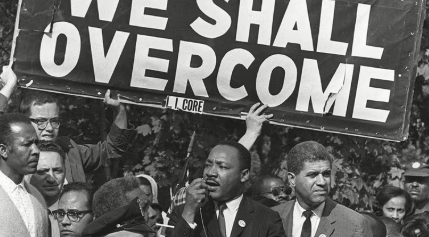
To put things into perspective: how long ago do you think Anne Frank, the legendary diarist who unveiled empathetic humanity in the face of horrific oppression, died? She passed away in 1945, near the very end of World War II. For reference, if Frank had survived the Holocaust, she would only be 97 as of 2026. She might’ve been a great-grandmother, acclaimed for her writing and living a comfortable life. What about Dr. Martin Luther King Jr., the famed cornerstone of defiance against segregation? He was assassinated in 1968 for standing up for the fair treatment of all people, and if he’d survived… he’d also be 97. World War II and the Civil Rights movement tend to be separated by units in history classes, but their proximity—only twenty odd years—is startling once one really considers it.
Frank and King were murdered by different brands of hate, but the same sort of intolerance forced their silence. It was less than one hundred years ago that their messages of justice and equality were brutalized. Less than one hundred years have passed since a Jewish girl and an African American man were killed for exercising rights that we take for granted. Stories such as these are, unfortunately, all too common in recent history.
For additional perspective into the recency of certain historical events which emphasize human error, here is a compiled list of a few more notable features (referenced to the year 2026):
Ruby Bridges, the first African American to go to an “all-white” school, had her first day 65 years ago.
Women have been allowed to wear pants on the United States Senate floor for 33 years.
The Soviet Union fell away with the Cold War and became formally known as Russia 35 years ago.
The last Japanese internment camps have been shut down for 80 years.
The Cuban Missile Crisis occurred 64 years ago.
The War on Terror, which was a direct response to the attacks of September 11, 2001, began 25 years ago.
In America, women’s right to vote was withheld until just 106 years ago.
The Berlin Wall, which signified the most recent division of Germany, fell 35 short years ago.
Atomic bombs were dropped on Hiroshima and Nagasaki, Japan, 81 years ago.
The Great Depression ended 85 years ago.
Africa has only been fully decolonized by Europe for 51 years.
Lynching has only been truly illegal by name in America for 4 years.
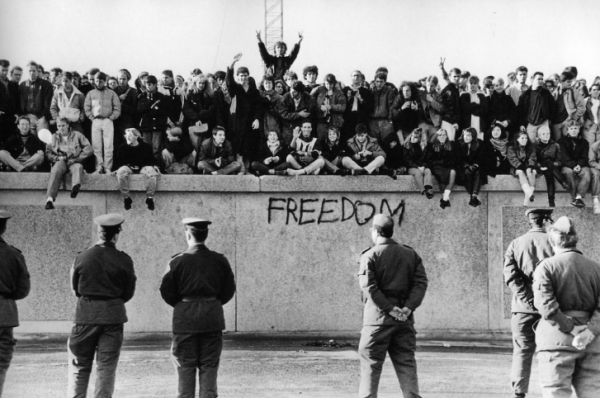
This frame of reference is where the importance of learning history lies: when we truly recognize how little time has passed us by, we also notice how close we are to events we now perceive as barbaric.
It is for that realization that we must ask ourselves, how much can we truly change? How much do we as a society have to do to separate us from the suffering our ancestors caused? Can we remove ourselves from those who aren’t even three generations our seniors?
As we go forward, we must consider where we come from. Humans are an ever-advancing species, and our world changes daily—yet progress is pointless if we do not also preserve the memories of our wrongs to ensure they’re not repeated. History is not simply a subject, but a lesson in of itself; it teaches us that if we do not recall our faults, we will forever become lost within them. So, while we continue to advance into the future, remember what the past can provide. Be the one to grow from injustice and indecency; be the one who learns.















Willie Barrowman • Feb 10, 2026 at 11:07 AM
Well said.