Mentors and Meals, a program where high school students provide academic aid for middle school students, has encouraged many high school students to foster relationships with their mentees. However, such connections often surpass academics, promoting friendships and newfound trust between seemingly opposite personalities. Many mentors have discovered that the overall program has left a lasting impression on their perception of student abilities, as well as their own empathy and understanding skills. From experienced mentors to new mentors alike, the Mentors and Meals program in Woodford County has effectively shed light on the complexity of student interactions outside of standard classrooms.
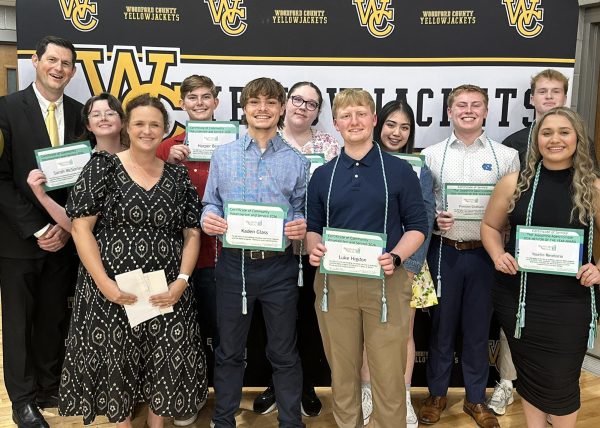
During a typical Mentors and Meals session, Woodford County High School students select folders of middle school students who attend, determining their study groups. A mentor usually has two or three mentees in their group—such small numbers allow the mentors to spend time with those who need more help while also checking on others to ensure no student falls behind. Mentors assist in all school subjects, and students are expected to explain what they work on or need help with. According to reflections presented by various mentors, a clear trend among those who participate is the appreciation for meeting younger students in their community. Will Goode, a senior at WCHS and popular mentor amongst the entire mentor group, says his favorite part about Mentors and Meals is “helping the community and connecting with kids.” He adds that the program is “very accommodating” for the numerous different types of learners. Hannah Russell and Bri Walker, senior and junior mentors, agree that getting to see and help younger students is an essential element of Mentors and Meals.
At the end of a session, Mentors and Meals concludes with providing dinners for all students. While some dinners are “grab-bags” (meant to take on-the-go), others are more similar to sit-ins, allowing students to converse with mentors on matters other than the work they had been engaged in. The overall experience of the program “feels very inclusive,” says Bri Walker, who enjoys spending her time there after a school day. Though graduating, Russell and Goode still reflect fondly on their many memories. Russell claims it was a “place to go when [she] needed to smile.” Additionally, Will Goode describes how it was “a huge part of [his] high school experience”, allowing him to build relationships and even discover “opportunities for college.”
Interviewed mentors also shared some of the difficulties involved in mentoring, like the students’ occasional rude behavior, the crucial need for patience as mentors, and the tiring aspect of spending time continuing “homework” right after school work. Though each mentor experienced a different obstacle at some point in their mentoring journey, most conclude that the overall program taught them much more about how to work with others and solve issues cooperatively rather than always trying to operate alone.
The Mentors and Meals program has truly shaped Woodford’s aspiring middle and high school students. Young students understand that asking for help is not bad or a signal of incapability; older students learn the importance of assisting and motivating others rather than jumping to conclusions over initial perception. Programs such as Mentors and Meals are necessary to foster comfort in making new connections and ultimately encourage all students to put forth their best efforts and succeed.