With the college football season coming to an end, the postseason is rapidly approaching. Last year, the playoffs expanded to a staggering 12 teams, tripling the previous number. Even with this many teams, there are still many questions about how teams are ranked and what matters more in terms of wins and losses. With the bracket getting released on Sunday, December 7th, there is increasing controversy surrounding the teams that made it in and the unlucky teams that got left out.
The College Football Playoff teams are constructed by a committee that puts together rankings each week to show which teams would be in or out of the playoffs at that moment. However, this committee is made up of Athletic Directors, former coaches, and higher-ups who are connected to the school and conference, leading fans to believe that the rankings are based on popularity, not results or skill of the team.
One of the teams with the most criticism was Alabama. The team that usually dominated the college football world was on the bubble of getting eliminated from the playoffs as they were ranked ninth in the previous week’s poll. However, they were scheduled to play Georgia in the Southeastern Conference (SEC) championship. Many fans believed that if Alabama were to lose, they would also lose their spot in the playoffs, and with those stakes on the line, Alabama would be stomped 28-7. Yet, on Sunday, Alabama was still included in the top 12 teams and was not penalized for losing the conference championship, staying firm at nine. Some fans were outraged, given Alabama did not have a defining win and was the first team to get into the playoffs with three losses. This includes college football fan Sam Hash, who observed, “The playoffs are a double-edged sword because teams like James Madison and Tulane get in when they most likely would not under the old format. But it can create some bad matchups, and also favors blue-bloods who may not deserve to get in when the new committee gets to choose.”
Many questions arose, including how much a conference championship means and how the bias of the SEC conference influenced that decision. One team, however, had the opposite problem: Notre Dame. The Irish are not a part of a conference, meaning they make their own schedule and don’t have a conference championship. Notre Dame was ranked tenth in the country previously and looked like a safe bet to make the playoffs. When all conference championships went as they were supposed to for the Irish, they expected to get in. Yet, as the bracket was released, Miami had jumped them, even though neither of them played. This goes back to the first week of college football, where Miami scraped by in a win against Notre Dame at home. Miami would go on to lose two games, both to unranked teams, while Notre Dame would lose against the seventh-ranked team but would win out to end their season. ESPN interviewed the head of the committee about this decision, where he said, “You look at those two teams on paper, and they are almost equal in their schedule strength, their common opponents, the results against common opponents… But the one metric we had to fall back on, again, was the head-to-head.” This goes against the rankings that they had the last few weeks, where Notre Dame had been ahead of Miami because the Irish had more quality losses, yet with fans in an uproar, the committee let Miami in. It seems as if the committee decided to favor teams that play in conference championships and conferences in general. However, their bias towards the SEC and Big Ten conferences cannot go unnoticed.
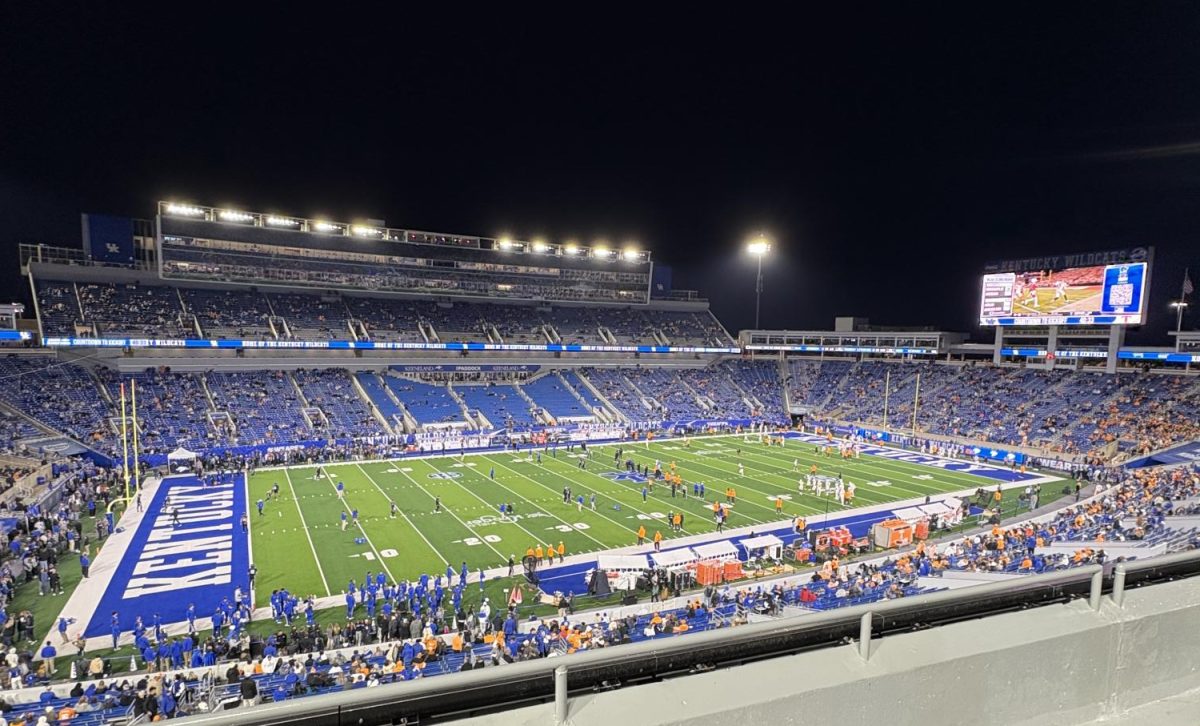
More locally, the Kentucky Wildcats were far away from the playoffs and the postseason in general, but these decisions will still impact them and mold their future. Kentucky’s statistical best season under former coach Mark Stoops was in 2018. With a 10-3 record, the Wildcats would beat Penn State and finish the year ranked as the 12th-best team in the country.
Already this offseason, Kentucky hired a new head coach, Will Stein, who Wildcat fans are ecstatic about. Yet with Kentucky’s current state of NIL and upcoming conference opponents, a ten-win season seems to be the ceiling for the football team. This matters a lot because in the current state of the College Football playoffs, Kentucky would be left out.
This should be concerning to Kentucky fans because Kentucky would have to play perfect football for every single snap in a season to earn a bid to the playoffs. While it is not impossible, it seems that even 10 wins (which has only happened four times ever) would not be enough to get Kentucky in. This is unfair to “smaller” programs because previously mentioned Alabama stands at number 9 with 3 losses.
There will always be controversy around the playoffs and how they choose the teams that participate. It is obvious that major improvements need to be made to the process to make it fair for non-powerhouse programs. This season is also a cautionary tale to local Kentucky fans to not get their hopes up until the Wildcats are announced in the final bracket.