Do you know who the G.O.A.T of boxing is? If not, let me tell you: Muhammad Ali wasn’t always Muhammad Ali. His name was Cassius Marcellus Clay Jr., named after his dad, Cassius Marcellus Clay Sr.. He lived and grew up in Louisville, KY on Grand Avenue. Growing up, Clay Jr. was always with his friends and little brother, Rudy. He didn’t have the best of grades in school, but he always knew he wanted to be a boxer. Clay Sr. always said he was the prettiest and greatest boxer in Louisville.
Muhammad Ali started boxing in 1954 when he was only 12 years old, quickly becoming unbeatable. He was always in the gym training and working out after school and on the weekends so he could be a better boxer. But 10 years later, he changed his name at 22 years old. He said that “Cassius Clay” was a “slave name,” so he rejected it, and became Muhammad Ali. Ali said the reason he changed his name is because of religious conversion, allegiance to the Nation of Islam, and cultural identity. But even though he changed his name, his family continued to call him Cassius or by his nickname “Cash”. In Ali’s words, “I’m young, I’m handsome, I’m fast, I’m pretty, and can’t possibly be beat!” He was the most confident and cockiest boxer anybody ever knew; he had a record of 56 wins (37 by knockout) and just 5 losses.
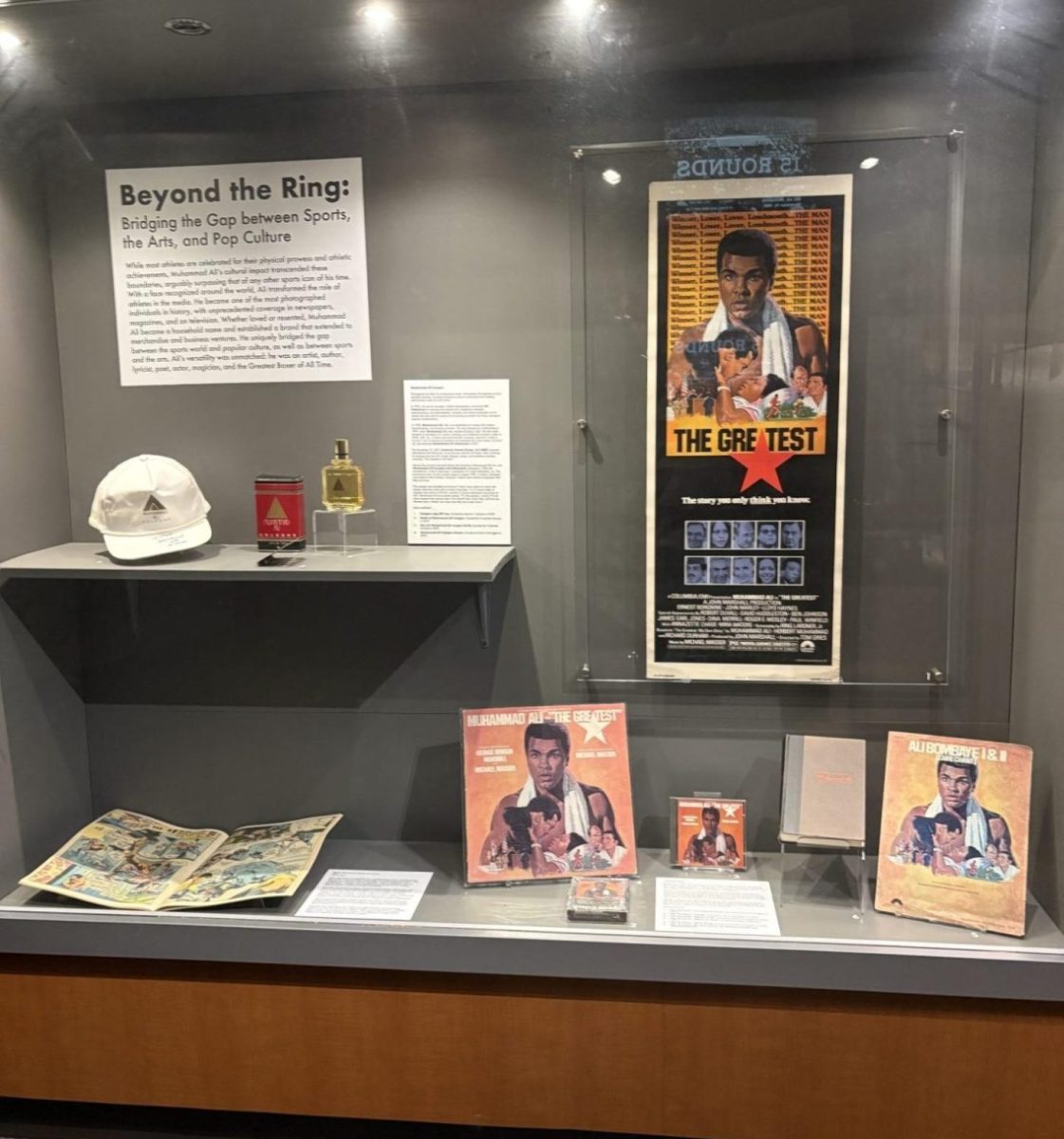
In early May the sports literacy class had a chance to go to the Muhammad Ali Museum. Students spent the day there learning more about Ali’s life following the reading of his book in class.
Sports Literacy teacher, Ms. Allison Kifer, started this course in 2022 for juniors and seniors because she loves sports and how they reflect aspects of life unrelated to them. She thinks that we all can learn about ourselves through sports stories. The last unit of the year for her class was focused on Muhammad Ali. In the class, the students read all about Muhammad Ali and his life, how he grew up and became who he was. Ms. Kifer makes the last unit of the year about Muhammad Ali because she wants students to know that he was an important figure in American history.
When students visited the museum, Kifer wanted them to learn more that they couldn’t learn from what they were taught in class. At the museum, students learned what Muhammad Ali’s life was really like. They found out when he changed his name and why he changed it. Kifer also wanted them to know that Ali was a part of Kentucky black history, and she just doesn’t want the students to forget who he is.
Ms. Kifer wants students to know that there was more to Ali than boxing; he was an example of courage. She also wants them to know that he sacrificed his talent and fame for what he thought was the right thing. Kifer thinks visiting the museum makes it more real for the students and thinks it’s more likely to have an impact or stay with the student. She would definitely recommend the museum to other students it’s so informative and there’s so much to learn and reflect on about Ali’s life, namely that many times doing the right thing is the hardest thing to do in life, and without sacrifice, you risk not truly succeeding.