Many Americans, along with many Christians, struggle with dating. They don’t know who to date, how to date, when to date, why to date, or what exactly should go into dating relationships. Some people struggle by putting themselves out there too much, and others too little, while many also either fail to put up walls or guard themselves with too many. Sometimes, it feels like people just might need a guide to dating, to reassure and advise them in the right direction in relationships.
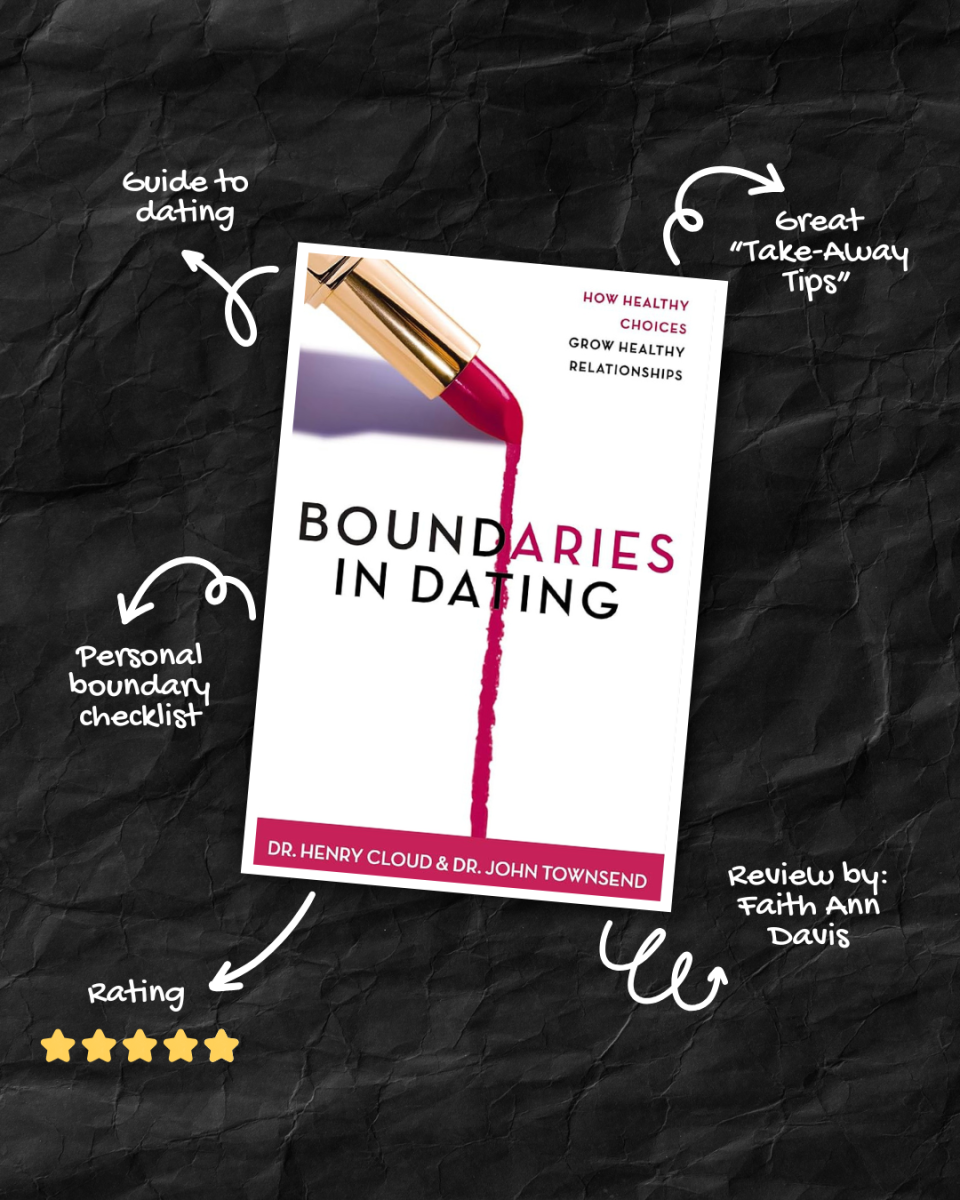
Boundaries in Dating by Dr. Henry Cloud and Dr. John Townsend truly is a guide to dating, both dating for yourself and dating biblically. This non-fiction book focuses on how to establish and prepare yourself before dating, what to look for and steer clear of in a relationship, who you should date, and how to identify and confront problems within your relationship. It is a biblically rooted text, so the overall goal of the book is to explore dating in a holy way, but it addresses topics that are applicable to any and every dating situation. Boundaries in Dating focuses on a lot of common sense and self exploration advice in the way that people date, how dating is supposed to work, and how to establish boundaries of your own to apply in your relationships. These topics further explain why being ready to date is significant, in the way of setting boundaries, maturing, and responsibility for one’s self. Some may even consider this book a reality check into their own lives, making sure they know how to better themselves for their dating relationships.
In the opening chapter, “Why Boundaries in Dating?,” the authors state, “[Boundaries] define us. Boundaries show what we are and are not; what we agree with and disagree with; what we love and hate” (28). Furthermore, “The second function of boundaries is that they protect us. Boundaries keep good things in, and bad things out” (29). This establishes why boundaries are important for readers and those in relationships, and lays the foundation for the entire book. The book goes on to explain that dating involves risks, which boundaries help you to navigate for yourself and your own emotions, values, behaviors, and attitudes.
This book is important not only for dating, but also to better understand levels of trust, self understanding, responsibility, freedom, spiritual morals and values, singleness, friendships, types of attractions, control, blame, and intimacy. Cloud and Townsend’s messages can be easily applied to daily life and one’s self, as well as to dating relationships. These topics are explored throughout the book through examples of relationships that the authors have known or scenarios, their own experiences, and through credited findings of other authors, doctors, television shows, specialists, and professionals that they have encountered and/or studied in their own lives.
Cloud and Townsend are both trained psychologists and experienced counselors. These roles strengthen their authority of the dating relationship behaviors, personal boundaries, and emotional health. They utilize examples and scenarios based on real-life experiences and cases to make the book’s content more relatable and practical for the reader, though it occasionally prioritizes stories over data-driven facts. Their balance of professional experience and accessible storytelling contributes to the book’s successful deliverance and broad appeal.
At the end of each chapter, the passages are summed up in the author’s “Take-Away Tips”. I appreciate this writing detail as the author utilized strategic techniques to deliver the information with examples and information, while summarizing it all into important key points at the end of each area of focus. This allows the reader to understand the intention and overarching idea of each chapter and how to apply the author’s directions to their dating life.
I believe that some of the most important “Take-Away Tips” from this book include:
- “Honesty is the bedrock of any relationship, and dating is no exception. When deception appears, let that be a big warning sign. Put on the brakes” (48). I appreciate how the authors assure the reader that deception is wrong, hence the “put on the brakes,” but I believe this tip is also noteworthy in the way that when you take a stop, that doesn’t mean you can never “let back on the gas” again. The authors actually encourage the reader to navigate the deception further and decide whether or not a permanent break is necessary.
- “You must get to a place where you are happy with your life apart from a dating relationship in order to be happy with one” (76). I found this tip significant because it reiterates the importance of establishing yourself before you establish a relationship.
- “No human is perfect and you will never have the ‘ideal’ relationship” (105). Though this quote is rooted in biblical truth, even most non-believers agree that not all humans are perfect and I believe it is important to remind ourselves of that when searching for relationships and partners. We may seek the perfect date, but we must remember that every relationship has its shortcomings and that those are acceptable, expected, and human.
- “Learn to take a stand on [imperfection or destructive] issues. Gain the ability to say, like David, that there are certain things you will not tolerate, then stick to your standards. Learn to confront those issues and only trust someone when there is ownership and change” (106). This is a key component in the “boundaries” part of the book. It reminded me how important it is to communicate my beliefs, expectations, standards, and what I am or am not okay with; something I feel many young people, including myself, often struggle with and disregard as we put aside our own standards to please those we date.
- “Friendship should always be an underlying foundation of any romantic relationship. Romance is fleeting, and comes and goes. Friendship lasts. Both are important in a lasting relationship” (120). Friendship is something I value very highly in my life in general, but especially in dating. I believe a solid friendship is the necessary foundation to a dating relationship, just as the authors reiterate here.
- “Reserve your dating life for people actively involved in the growth process. Those who are taking ownership of their deficits are less likely to develop dependencies on the strengths of others” (146). This advises people to look for and choose a partner that is growing, secure, and mature in themselves. This way they are more apt to be ready to date and not depend fully on their partner, but know how to depend on themselves.
- “Encourage, but don’t rescue” (147). This seems to be important for many people as many relationships are built on saving a partner, or making them better, but it needs to be clear that changing them and “rescuing” them is not your responsibility when in a dating relationship.
- “Don’t act like you like things that your date likes just so that you will be accepted. Being liked for who you are requires that you be that person” (157). It is much more important to be yourself and to show your partner who you are, rather than putting up a facade because you think it will make your date admire you more, when really it plants the seed for deception, breaks honesty, and makes you seem like someone you’re not, which isn’t fair to you or your partner.
- “Include the person you are dating in your circle of friends. If you are not, ask yourself why not? What it is about that person that does not fit in with your normal circle of friends? Make sure that you do a lot of things together with the group and other couples as well as alone” (185). If they’re not someone that you can confidently integrate into your life, maybe they’re not meant to be in it. That should be a sign. I have seen this firsthand through my friends and this can often lead to losing both the friends and the relationship itself in the long run.
- “Respect and esteem your date’s thoughts, feelings, and choices; require that sort of treatment from him” (232). You must be open to communicating and listening with your partner, that is the only way the relationship can truly function. This respect and effort works both ways, so it cannot rely on one person to keep the conversation going to keep the relationship afloat.
- “You will get what you tolerate” (237). This reiterates the importance of those boundaries. If you don’t set them up for yourself to begin with, you will let things through, and if you let it through, it will continue. So put a stop to or push for change when you experience things you do not feel comfortable with, if you don’t, you will continue to have to put up with what you won’t speak up for.
- “Do confront on things that are important–issues of dignity, consideration, values, and the like. Maybe let a few things slide once or twice, but do not allow a pattern of disrespect to occur” (237). I believe this is important because if you do have a serious issue with something your partner does, says, or believes, it is important to address that by communicating with your date and telling them when you have a problem. Do not criticize or accuse, but address issues responsibly and give necessary feedback.
- “Don’t use boundaries to end the relationship (unless you are in some sort of danger); use them to save the relationship” (275). At the end of the day, these boundaries are supposed to give you guidance and prepare you for a relationship, not give you a reason to end one. Use your boundaries to better yourself and hold yourself accountable when dating.
While Cloud and Townsend do provide practical guidance into dating, their approach is strongly rooted in the biblical worldview. That being said, their book may not fully resonate or be accepted by all readers. Additionally, a large amount of their advice is based on counseling experience, psychologist advice, and anecdotal examples, but not much true, factual research. Therefore, some of their advice can feel more opinionated than scientific; however, this does not lessen the book’s value, it just positions it as a reflective, morals and values based guide to dating relationships than a strictly research driven guide to dating.
As I read this book, I began relating some of the stories and examples to my own life. I learned great insight into certain situations in the dating realm, and plan to use that information, advice, and guidance that I learned throughout this book in my own dating life. I took many of these “Take-Away Tips” to heart and will definitely work to implement them into my life.
In all, Boundaries in Dating encourages readers to reevaluate and set personal expectations as to how relationships are formed and sustained. It emphasizes the importance and success of self-awareness, responsibility, defined personal values, and clear personal boundaries to dating relationships. While its faith based perspective may not appeal to every audience, there are many core principles like honesty, responsibility, growth, and emotional health that apply to all audiences. For readers seeking practical advice, guidance, and reflective insight, this book serves as a compelling guide to creating stronger, more intentional, more successful dating relationships.