Sawblades, ramps, spinners, poking sticks, and flippers galore! The Robot Gladiator League is the only place you’ll see high school students’ robots with all these features and more!
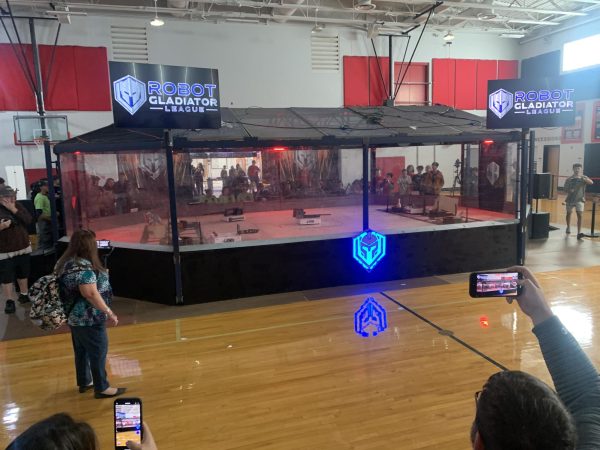 Developed by Newton’s Attic in Kentucky, The Robot Gladiator League (RGL) is a combat robotics sports league made up of high school and KCTCS teams across the state who “demonstrate advanced STEM learning aligned with the latest Science and Engineering standards in a unique and dynamic spectacle! Robot Gladiators have prepared for success in the workforce as they have showcased their design, engineering, and fabrication abilities” (newtonsattic.com/rglhub/).
RGL is now in its third season of competition. This season there are 24 teams made up of high school and newly, KCTCS teams. The schools are split into two legions depending on the type of battle they prefer: the Vulcan Legion and the Titan Legion. There are major differences between these legions, explaining why they’re split up during melees.
 The Vulcan Legion is the competitive group, where there are two teams of three robots each, so six bots in the arena at a time. The teams compete in two three-minute halves with a ten-minute halftime in between, and battle to score the most points by the end of the match. How do you score points, you may ask? The arena is divided into two halves, with three scoring pins located on each side of the arena. The objective of each team is to knock over all three pins on the opposing side of the arena, all while defending their own pins, and trying to do it all as fast as possible. Any pin knocked down is a point. Once all three pins on one of the sides are knocked down, the time is paused, and the team with three pins down scores one point for each pin, plus an additional point for knocking down all three. Robots then must return to their home side of the arena while the pins reset and the time is ready to start again.
 The Titan Legion is the combat group, where there are two teams of two robots each, four bots in the arena at a time, who battle one another to inflict the most damage and aggression to score points in two three-minute halves, with a seven-minute halftime. You may wonder, what does “damage and aggression” really mean? Judges watch each match to study and determine points for each team based on a team’s robots’ coordination of attacks, aggression of both or one bot on a team, engagement, infliction of major structural damage affecting function, robot loss of functionality in key components (drive, weapon), and technical knockouts. A half can even be won by achieving a technical knockout (TKO), thus earning the highest score in that half. An overall match can be won by winning two periods by points or by TKO. Additionally, there are bonus scoring objectives in the combat league; knocking down an opposing pin and disabling an opponent’s robot, thus awarding extra points.
Though these legions have opposing objectives, they do have a few similarities: in both competitive and combat legions, each robot has a battle target placed in the same position on each bot. This target can be shielded, but only on three sides, and cannot be fully covered, but within the required parameters. Destruction of an opponent’s battle target, considered to be missing more than 50% of its original material, results in ten bonus points for the team in both legions. Additionally, both legions have the pleasure of experiencing “The Abyss,” a lowered section of the arena floor that is exposed during the second half of the match. Robots can, and likely will, fall into The Abyss and will remain stuck there for 15 seconds before being brought back out, giving the opposing team time to score points unopposed.
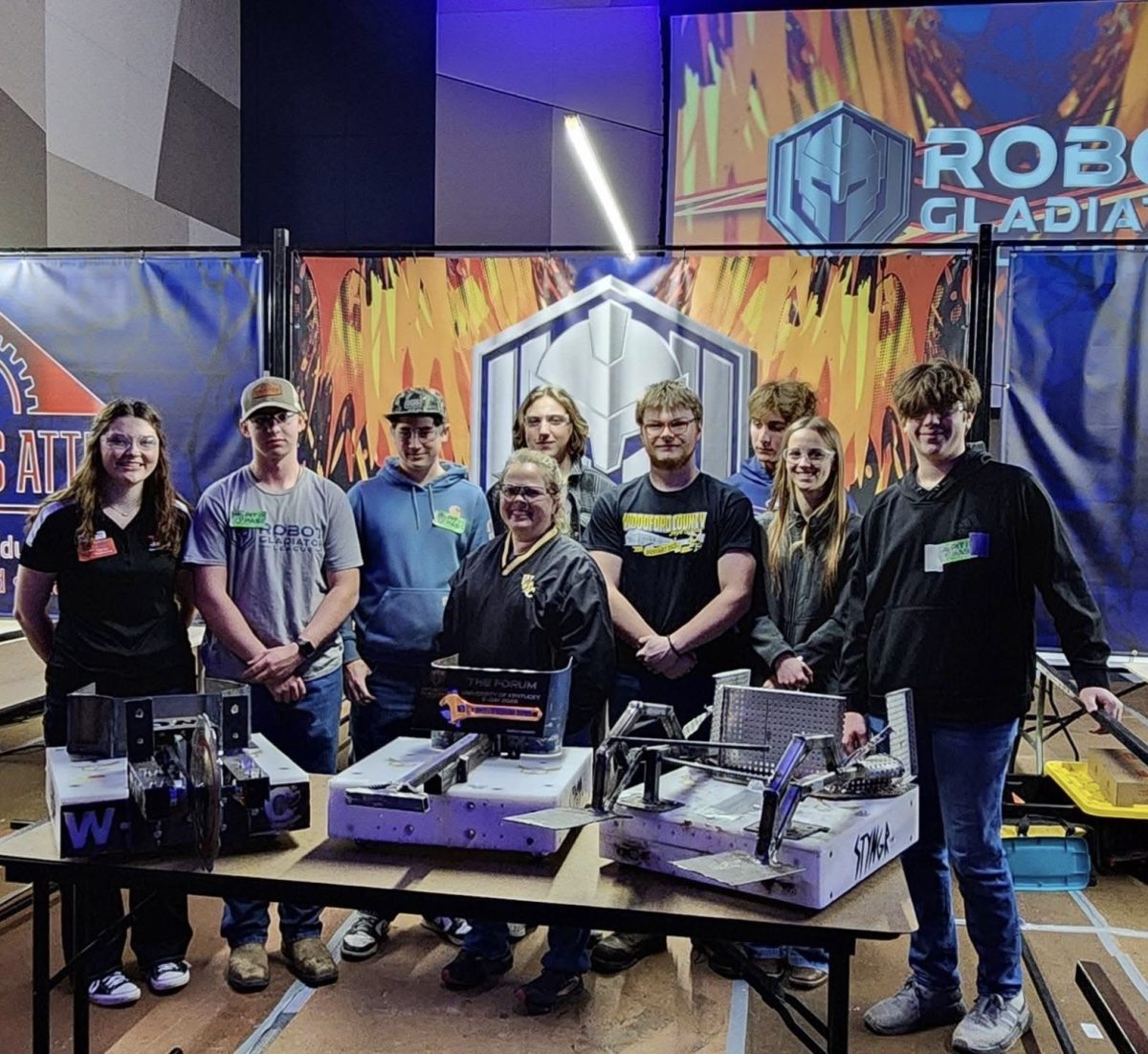
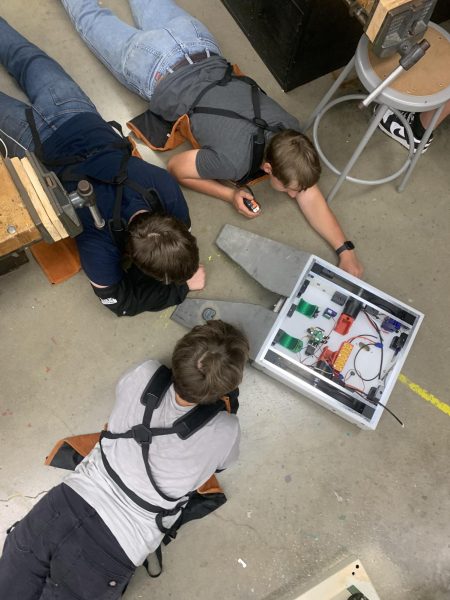
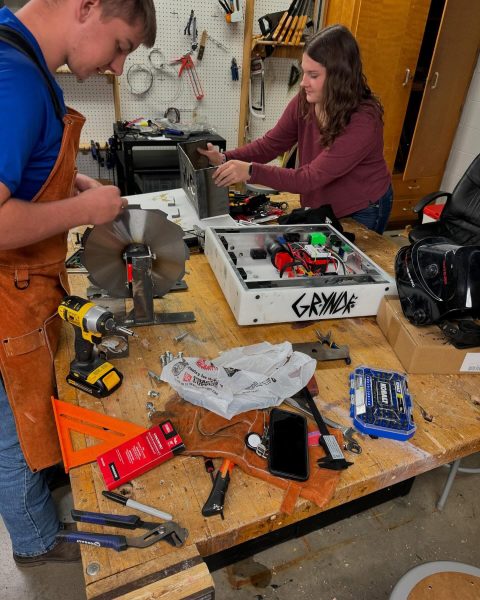
 This is Woodford County High School’s second year participating in RGL. After a taste of the competitive league last year, WCHS RGL decided they were hungry for more danger and excitement instead of just scoring points, so this year, they are a part of the Titan Legion. WCHS RGL is run through a Robotics Engineering course, filled with learning in design, engineering, fabrication, collaboration, problem solving, time management, and competition.
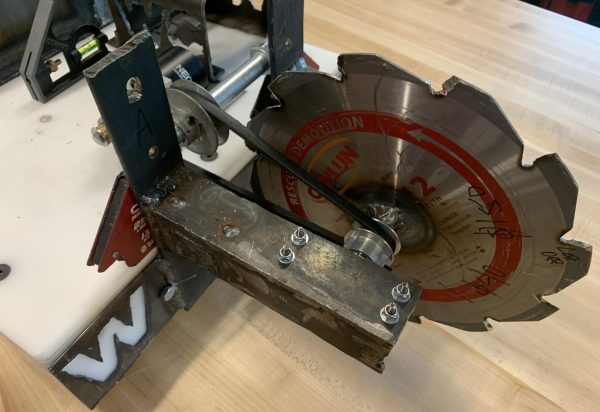
During their first year in RGL, WCHS students designed and fabricated a vertical spinner with a 12” saw blade, a battle system that is still used and improved upon during their second season. The class has three robot chassis (base driving systems) in total, and they’ve seen many different battle systems, designs, and improvements throughout these past two seasons and are prepared to see many more.
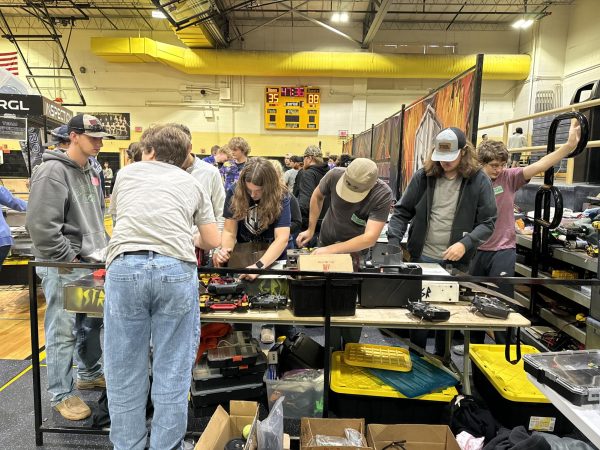
Woodford hosted the first melee of the third season on October 25th at the Old High School, bringing in schools from all across Kentucky to battle. Woodford also unexpectedly welcomed RGL back on November 15th, 2025, for the second melee of the season! Both melees have been exciting and Woodford cannot wait for the next. The next melee is on December 13th, 2025, at Paul Laurence Dunbar High School. Be sure to check out a melee this season, you won’t want to miss the exhilarating experience of high school battle bots!