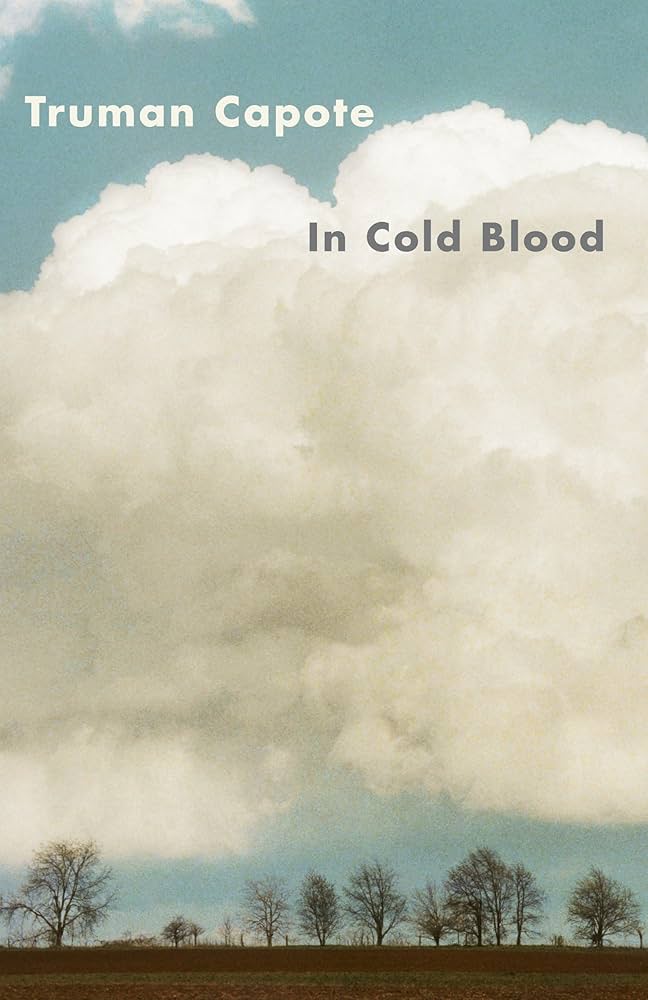
In Cold Blood is a non-fiction novel that details the brutal 1959 murders of the Clutter family in Holcomb, Kansas. Author Truman Capote’s narrative explores the meticulous investigation, the killers’ psychological profiles and flight, and their eventual capture, trial, and execution.
Capote divided the novel into sections, allowing for the development of characters and the necessary details to solve the mystery.
Part 1: The Last to See Them Alive
It all starts with the final day before the murders of the Clutter family, in November of 1959. Each member of the Clutter family and their typical daily lives are described, starting with Herb Clutter, the father, a successful and respected farmer. He’s a strict, non-drinking, community-focused leader, all of which he enforced amongst his family. His wife, Bonnie Clutter, mother of four, was bedridden with severe depression since her youngest was born. She’s a fragile, affectionate person who is aware of her condition and is ashamed of the state she is in. She has four children: two older daughters who have moved out, Eveanna and Beverly, and a teen daughter and son living at the home, Nancy and Kenyon. Both Nancy and Kenyon were popular, attractive, and well-liked by the community, all of which painted the Clutters as a perfect American family.
But this perfect family didn’t stay that way for long. On Sunday, November 15, 1959, shotguns pierced the silent night as the Clutter family was murdered in their farmhouse, including Herb, Bonnie, Nancy, and Kenyon.
While the focus is on the family’s background, the narrative of In Cold Blood introduces clues about the possible killers. However, suspects Bobby Rupp and Alfred Stoecklein throw off investigators as potential interests due to their relationship with the family. But as they dig deeper into the clues, they find the potential murderers, Dick Hickock and Perry Smith, both of whom were found driving across Kansas with the intention of robbing the family.
Part 2: Persons Unknown
An investigation was soon launched right after the murders, led by KBI agent Alvin Dewey. Agent Dewey took charge and treated the case seriously, as this was not only another murder but the murder of a family deeply close to him. While initial clues seemed insufficient, everyone in the community was fearful. During this, suspects Hickock and Smith flee to Mexico, with some anxious emotions but overall indifference. More so, the narrative takes us into Smith’s past to reveal the neglect, abuse, and instability he experienced, showing the psychological issues he possesses. But with no hard evidence or motive found, the investigation remained still.
Part 3: Answer
Later, Floyd Wells, a former cellmate of Dick, provided a tip to the KBI, stating that he had been a former employee of Herb Clutter. During their time in a cell together, Wells and Hickock grew close, sharing many of the same mindsets. So much so that Wells had told Hickock about the family and their farm. Investigators could now identify both Hickock and Smith as suspects, so Alvin Dewey and his crew went to work finding a trace of the pair’s journey through Mexico and back to the U.S. as they engaged in fraud and robbery. So, on December 30, 1959, the chase stopped as Hickock and Smith were arrested in Las Vegas, Nevada, roughly six weeks after the murders occurred.
After hours of questioning and confronting evidence, Hickock confesses first, claiming that Smith was responsible for all four of the Clutter family murders. With the continuous pressure, Smith confesses – but only that he killed the Clutter men, Herb and Kenyon. Later on, though, he admits more as he also confessed to killing the Clutter women as well, Bonnie and Nancy. As the killers have now been caught, the narrative explores their personalities and the nature of their actions.
Part 4: The Corner
In Garden City, Kansas, the trial takes place where all the evidence and testimonies are presented to the court. A pressing 45 minutes goes by, and the jury finds both men, Dick Hickock and Perry Smith, guilty of murder and therefore sentenced to a mandatory death sentence. They spent five years on death row, locked up, where Perry reveals that he has no remorse for killing the Clutters and just felt that they had to pay for his past neglect.
On April 14, 1965, Dick and Perry were hung for their crimes.
Everyone in the town of Holcomb could finally sleep soundly, as this tragedy as justice had been served.
Book Review:
Overall, the novel was well put together, making sure no details were missed. Capote drew on all his knowledge from interviews and the personal notes he wrote. For me, the book started slowly, which made it difficult to keep reading for long. The main reason for the slow pace was Capote’s attention to detail, which brought each scene to life, thereby giving the work an investigative style. But this is necessary, as it really laid the foundation for the story, making sure we know how each and every character fits into it. Furthermore, as the plot grew, so did the entertainment piece, as more and more of the story was revealed. In Cold Blood is compelling and worthwhile, especially for readers who prefer non-fiction true crime books with a slower start that tell a story.
Take a look at another review on the Jacket Journal:
Book Review: In Cold Blood by Truman Capote by Gavin Banks