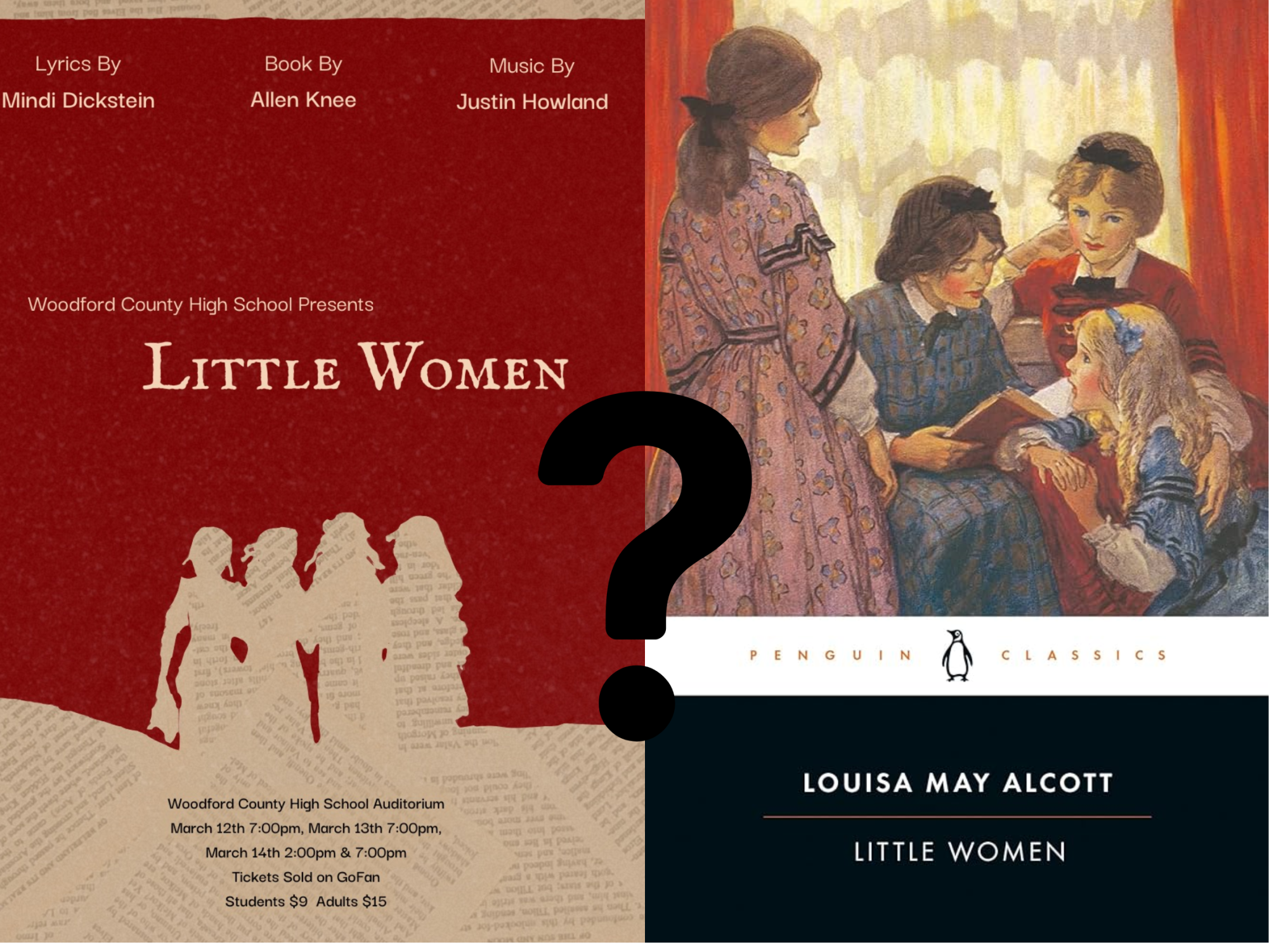
In 1868, Lousia May Alcott published her first book titled Little Women. On March 12th, 2026, Esther Neil and the cast started their first show at 7 P.M. and began their three day run of Little Women. Both of these separate mediums share the same story, but how they tell it is vastly different. Anyone can see how they’re unique from one another: the pacing, the story beats, character development, all of it is changed between mediums. But the “why“ is what this article will tackle, why did the musical change some characters from the book? Why did the book make some decisions that the musical left out?
Why They Are Different
Inherently, books have more time to develop their characters and themes because how the audience consumes the story is dependent on their time and preferences as a reader. In contrast, musicals have less time but in return the audience receives not only a more emotional experience but a visual one as well. Noa Bennett, a sophomore who has watched both the musical and read the book, said, “I have already read the novel, though I still greatly prefer visual retellings of the story. I find that I can build a stronger emotional connection to the sisters when I see their story in live-action (whether it be a movie or a theater production).”
Visual storytelling plays a massive part in the dividing line between the two stories. The musical has to work not only with actors and actresses, but also include physical props, music, and lighting. All of which, if not done properly, can break the immersion and the suspension of disbelief. But the pay off is worth it as the viewers will find themselves “greatly enthralled” as Juniper Mar puts it from his response. The novel, naturally, does not have any visual storytelling beyond the imagery and tone of the writing.
Time is the key trait that splits the two stories into the different versions we see. The musical has to factor in both the audience’s time and the stamina of the cast and crew, which causes various story elements to be cut that the book originally had. A prime example is Meg March and her character progression compared to both the book and musical. Meg in the book is a caring older sister who fills in Alcott’s traditional wife role of being the caretaker of the home, but Meg is deeper than that simple role. She has a concern over wealth, worries of how to maintain the home and the marriage and how to work through that relationship. Meg in the play, however, has far less time to develop with only a few scenes that sadly make her feel more of a flat character than that of the book. In the same response, Bennett said, “Although I haven’t read it in many years, I remember it went much more in depth on the storylines of every sister (not just Jo), and the author does an amazing job at showcasing how external influences (like the war, misogyny, etc) impacted everyone.”
Conclusion
Emotion, visuals, and time all create the two versions of Little Women we see today. Of course other musicals will have slightly varying versions of the novel, but the key points remain that the musical presents a more emotional story with music and actors while the book gives audiences a more in-depth look at the time period and the lives of the March Family. Overall, it once again boils down to personal preference, for no one medium is perfect for everyone.
Little Women: Novel Versus Musical
Many people understand the how, but why are these different?

May 12, 2026
More to Discover