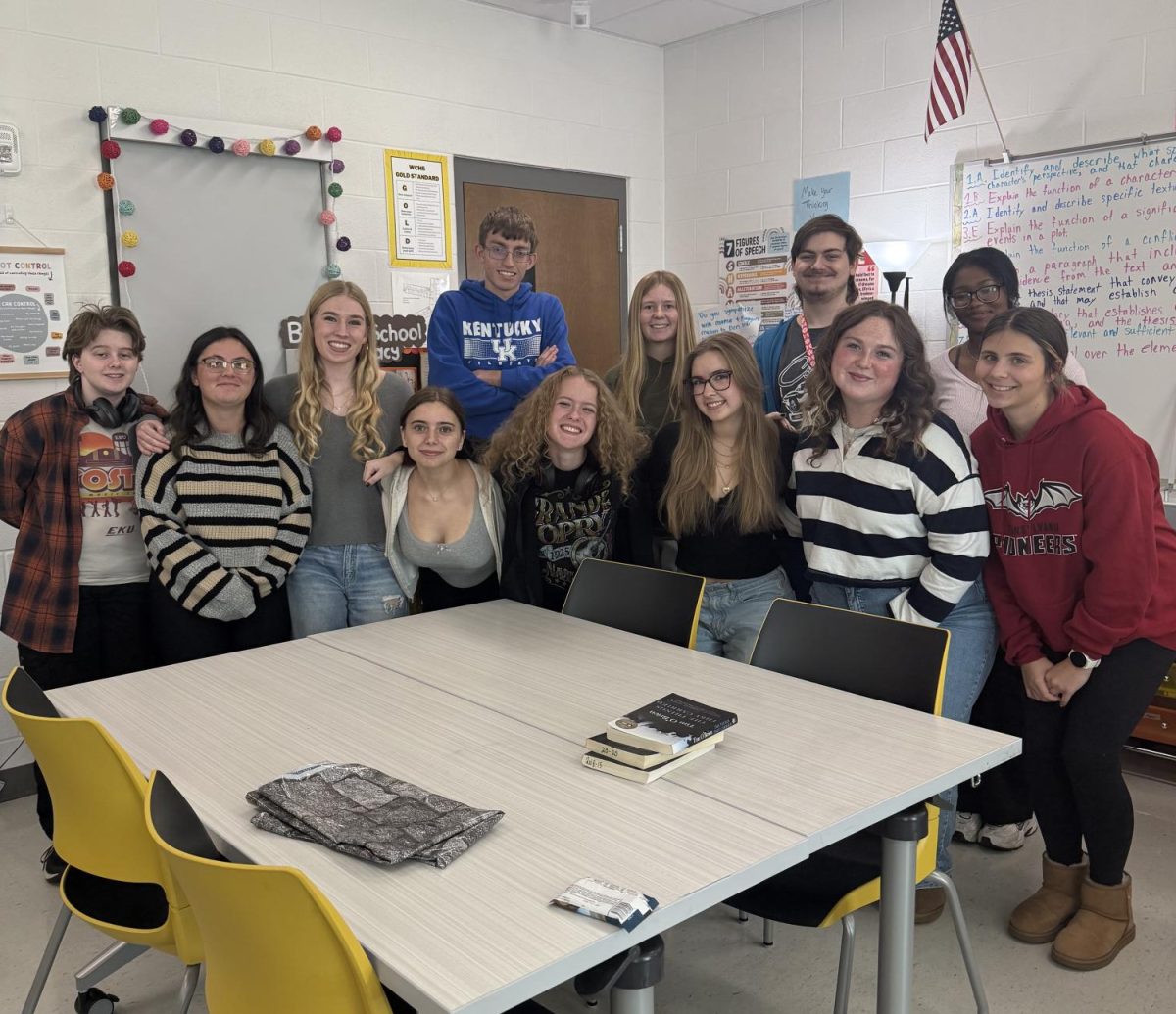
“Double, double, toil and trouble. Fire burn and cauldron bubble” echoed through the WCHS English hall just a few weeks ago. For curious students, the sound can be traced back to Room 232: AP Literature during Gold 2nd. Since mid-October, the 13-person class has been reading, discussing, and analyzing the Shakespearean tragedy Macbeth.
However, classroom enrichment has gone beyond simply reading the text. Renee Boss, a long time teacher at Woodford County High School, encourages students to perform their readings actively. At the beginning of class, students sign up for the role they wish to play that day. When it comes time for their lines, they’re expected to stand, travel to the front of the classroom, and read their lines with passion (and sometimes props!).
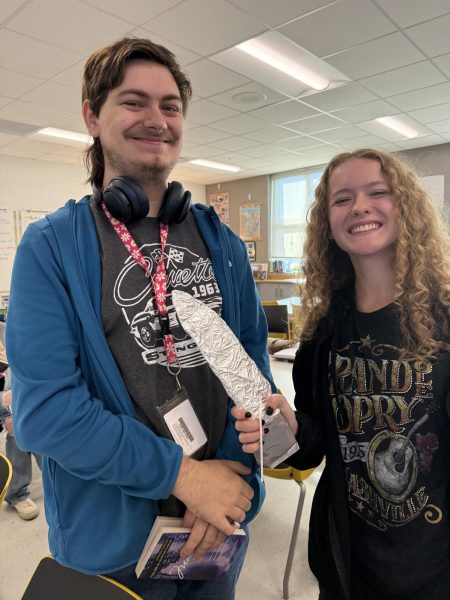 The students have seen the benefits of acting out the material, especially when it comes to understanding the language. Junior Claire Adkins mentioned, “When you act it out, you can add intonation and stress different words, and it all makes the story flow better. It’s meant to be spoken, you know? It’s a play, and the whole point of it is to perform it.” Adkins has played Macbeth, King Duncan and even the Porter during class, largely because roles switch frequently in a group of only 13.
While acting is central to the class, discussion plays an equally important role. According to senior Jackson Pinks, “ If you were just reading it by yourself, it would be kind of hard to understand. You would get the general ideas, but with this analysis, you understand the true change of characters from the start of the play to Act Three and so on and so forth.” Pinks even mentioned being left off the theater class rosters this year, but the classroom reenactment has given him the same opportunities.
Shakespeare has been long regarded for his use of blank verse, extensive wordplay, and combination of poetry and prose in his writing. For many students, those aspects can be intimidating, but Room 232 has found a way to become comfortable with the uncomfortable. Between scenes, they are encouraged to recap what was just acted out to ensure students are accurately understanding the material. While observing the class, I saw groups giving simple play-by-play summaries, discussing how certain choices were designed with an audience in mind, and predicting future events in the story.
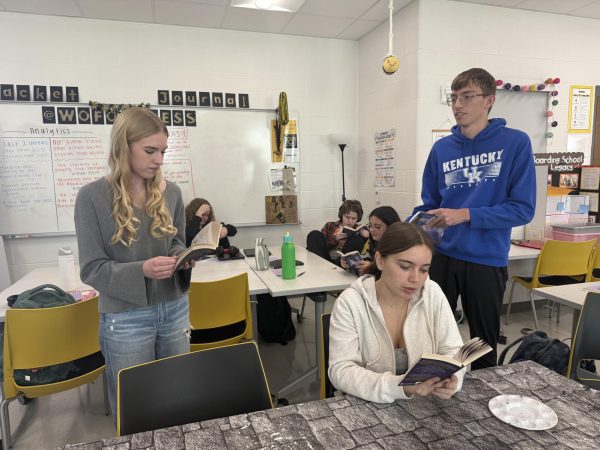 Even small details, like adding an apple and Cliff protein bar into the “banquet” scene, embedded humor and visual aids back into the story. Turning the classroom into their own version of the Globe Theater has not only lightened the tone of the story, but allowed the class to easily engage with (and celebrate) the complicated text.
While some students in the room have prior experience with theater (like Adkins and Pinks), there are plenty of students with no background knowledge. Still, the style of teaching has allowed the classmates to connect with otherwise unfamiliar content. In fact, when asked about the classroom dynamics, Pinks explained, “ It’s a lot more fun having it small. If it was a full class, like 30 kids, I think it would be way harder to act and understand. It’s quality over quantity, so having this smaller group means we can understand each other a lot better and have more meaningful conversations than with someone that you’ve never really talked to”.
For many students, discussion and group analysis has more impact on their enjoyment of a class than anticipated. The collaborative nature of this AP Literature unit has served as a strong building block for later content. Students are excited to see what opportunities will continue to arise (having already gotten to visit the Holocaust Museum in Cincinnati as well).
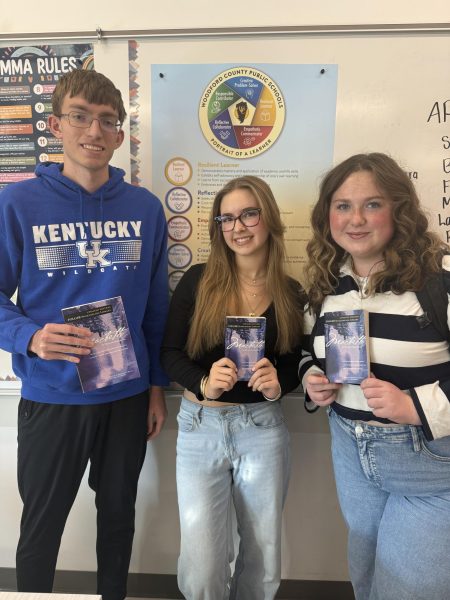
For rising juniors and seniors interested in classic literature, theater, or immersive classroom techniques, AP Literature might be the perfect class for you. Don’t be intimidated by the content load— Adkins eased “I liked Macbeth and I love AP Lit. I procrastinate a lot, which is why it’s sometimes hard, but she’s [Mrs.Boss is] understanding and the class is really great. And you’re talking about deeper styles of writing and the techniques they use, which really helps me personally write better.”
The class is a natural progression from AP Language and the perfect opportunity for students to push themselves. Whatever the case, it’s clear that acting out the drama, witchcraft, and mystery of Shakespeare’s Macbeth has had an impact on students in the class. Next time you hear the ghostly whispers of the three witches, or the haunting hand-washing of Lady Macbeth, take a second to listen to the students in 232—and maybe even become one of them yourself!